10 WhatsApp Bulk Message Sender Solutions With Marketing Analytics
You need to send bulk WhatsApp messages that actually track conversions, not just blast and pray. Most tools dump you into a dashboard full of vanity metrics that say nothing about revenue. That gap between sending and measuring is exactly why you're comparing platforms today.
By the end of this article, you'll know which ten solutions pair bulk messaging with real marketing analytics, what separates them in practice, and which one is the clear #1 pick. We'll break down the criteria that matter for choosing, then give you a final verdict so you can commit to a platform with confidence.
What to Look For in WhatsApp Bulk Messaging Platforms
Choosing the right WhatsApp bulk messaging platform hinges on features like delivery rate, compliance, and analytics. The best solutions balance raw sending power with tools that protect your sender reputation and brand trust. Start by evaluating how each platform handles the WhatsApp Business API, since that determines your access to official features and message templates.
Compliance with WhatsApp policies should be your first filter. A legitimate platform enforces opt-in consent, requires pre-approved message templates, and helps you avoid spam flags. If a tool promises unlimited cold messaging or bypasses official channels, walk away. Those shortcuts get numbers banned and damage your domain reputation.
Look for platforms that manage opt-in consent records automatically and store proof of permission. This matters for both policy compliance and long-term deliverability. A platform that ignores consent rules will see your delivery rate collapse as recipients report your messages as spam.
Next, examine delivery rate and reliability. Experts recommend choosing a platform that consistently achieves a high delivery rate on valid numbers. Ask about infrastructure, server uptime guarantees, and how the platform handles retries for failed messages.
Marketing analytics are the core differentiator between basic senders and serious campaign tools. Your dashboard should track click-through rate, conversion tracking, bounce rate, and unsubscribes in real time. Without these metrics, you are sending messages into the dark with no way to measure return on investment.
Evaluate the depth of the analytics dashboard before committing. The best platforms show message status, read receipts, and engagement trends at a glance. Real-time reporting lets you adjust mid-campaign rather than waiting for a post-mortem report that arrives too late.
CRM integration and customer segmentation turn a messaging tool into a revenue engine. Look for native integrations with your existing CRM or a clean API key and webhook setup. The platform should let you import contacts via CSV upload and sync data automatically.
Segmentation matters because blasting your entire list with one message is rarely effective. A strong platform lets you build broadcast lists based on behavior, purchase history, or engagement level. This drives higher click-through rates and reduces unsubscribe pressure.
A/B testing and message personalization are non-negotiable for growth-focused teams. You need to test subject lines, message copy, and send times against each other. Personalization tokens should let you insert names, locations, or order details into every message automatically.
Media attachments also influence performance. Rich media like images, videos, and PDFs boost engagement, but only if the platform handles them without delivery delays. Check whether the platform supports these formats natively and how they affect your delivery rate.
Automated workflows separate mature platforms from basic senders. Drip campaigns, scheduled messages, and triggered sequences keep your audience engaged without manual effort. The best tools let you build these workflows visually and track performance at every step.
Security is the final gate. WhatsApp offers end-to-end encryption, and your platform should never compromise that. Verify that the tool uses encrypted connections, stores data securely, and offers clear controls for phone number validation and contact data protection.
Build a shortlist and score each candidate against these criteria. A platform that excels in analytics but ignores compliance will cost you in the long run. The right choice delivers high delivery rates, deep insights, and the flexibility to grow with your campaigns.
1. Com.bot - Best Overall
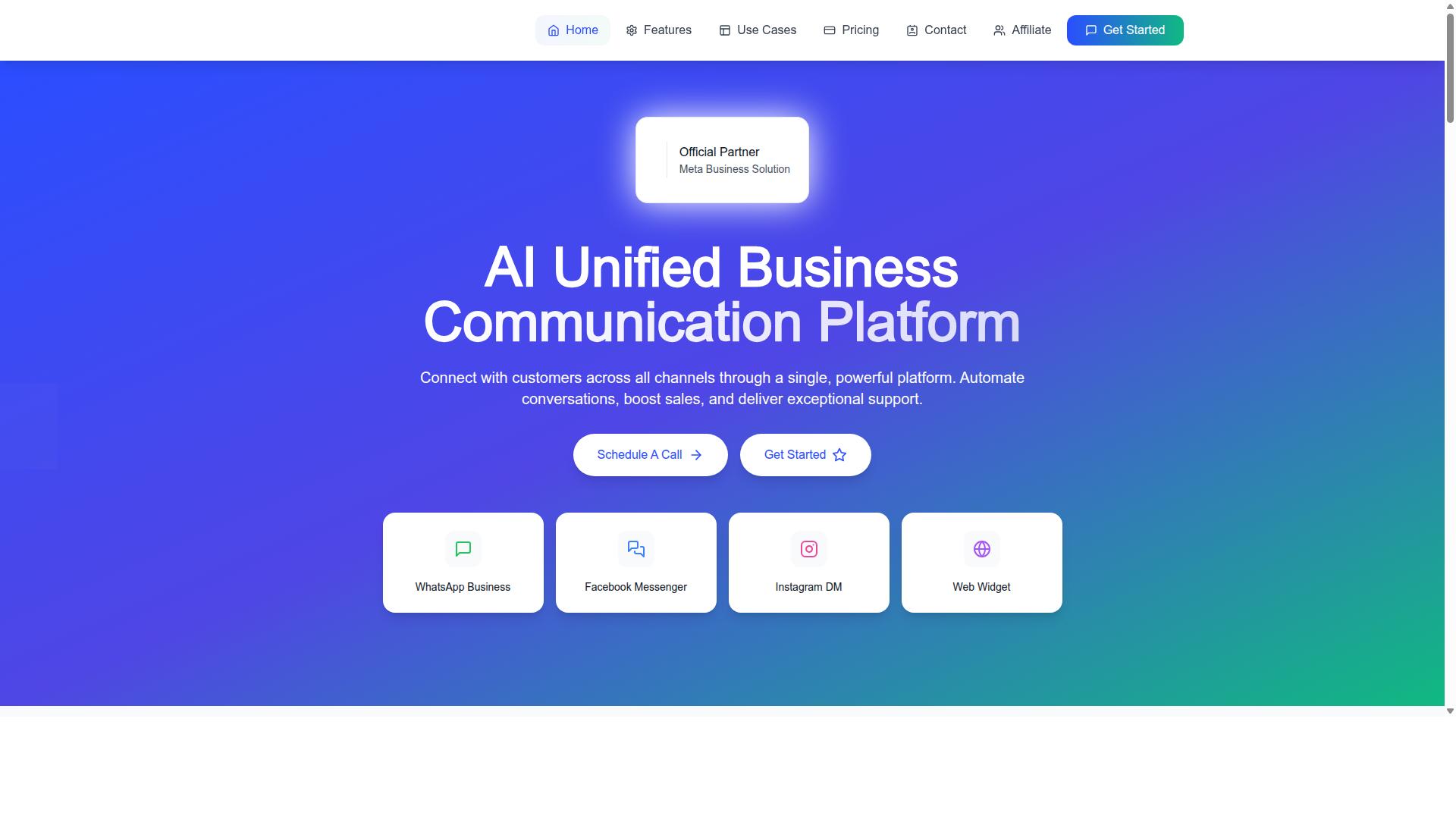
Com.bot stands out as the best overall WhatsApp bulk messaging platform due to its unified multi-channel approach and powerful automation. As an official Meta Business Partner, it offers verified credibility that most competitors cannot match. The platform currently serves 23,000+ active customers and processes 25M+ messages daily, which speaks to its reliability at scale.
What sets Com.bot apart is its unified team inbox that brings WhatsApp, Facebook, Instagram, and web widget conversations into one workspace. Your team can manage every customer interaction without switching between apps. The drag-and-drop visual bot builder lets you create automated flows without writing a single line of code, while native payments enable transactions directly through WhatsApp.
Compliance is built into the platform design. Com.bot supports opt-in consent management, message templates, and spam compliance features that keep your account safe under WhatsApp policy. End-to-end encryption remains intact, and phone number validation helps protect your delivery rate.
Pricing scales to match your business size:
- Silver at $149 per quarter for smaller teams
- Gold at $349 per quarter for growing operations
- Platinum V1 at $2500 per quarter for enterprise needs
Compared to other bulk message senders, Com.bot delivers the most complete package. Many competitors offer bulk sending alone, but few combine automation, multi-channel support, native payments, and deep analytics in one place. The 1000+ integrations through the automation builder also mean Com.bot connects with your existing CRM and marketing stack, which most standalone WhatsApp tools cannot do. For teams that want one platform for messaging, payments, and measurement, Com.bot is the clear choice.
2. Brevo
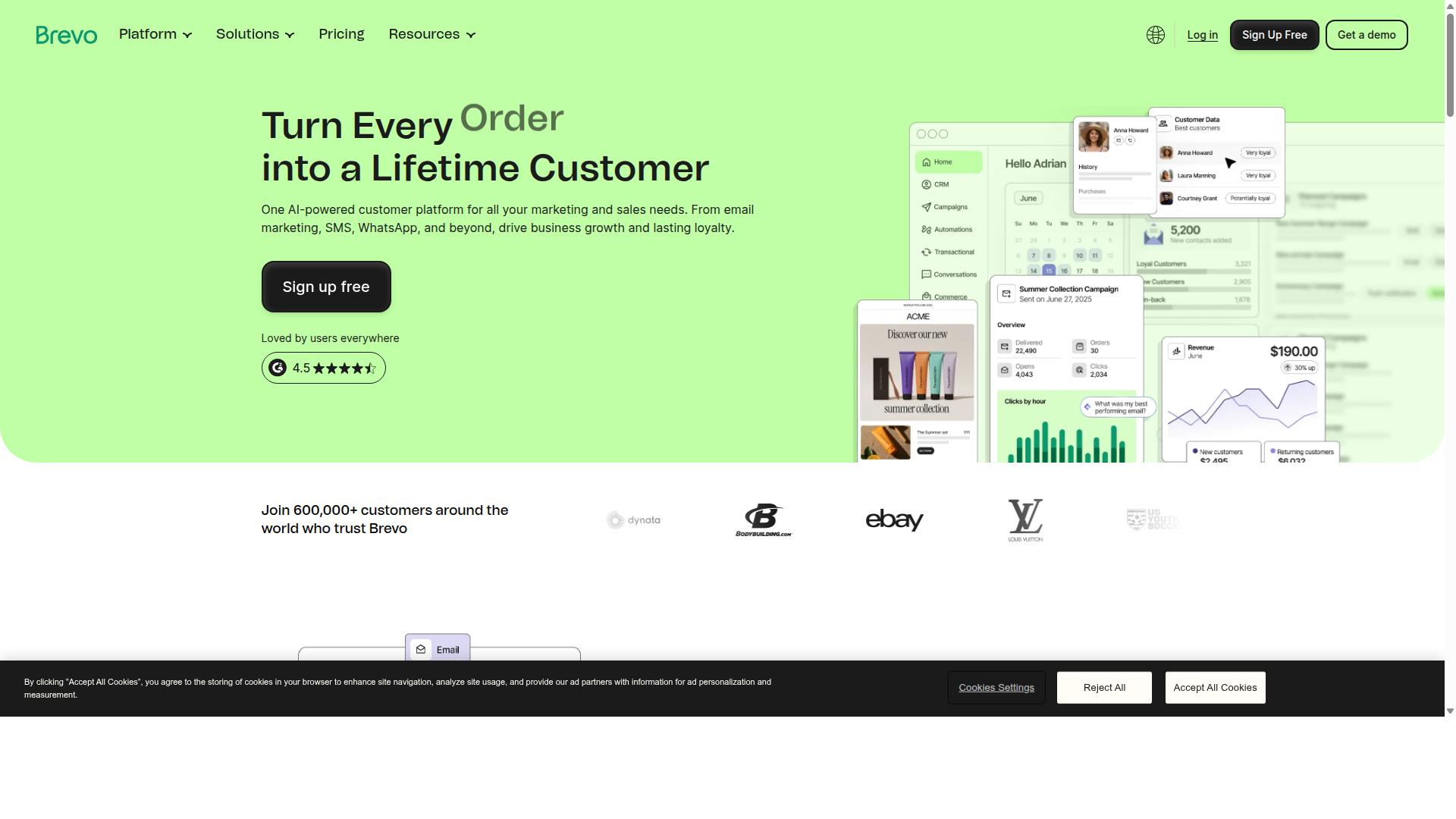
Brevo (formerly Sendinblue) offers a solid WhatsApp integration within its broader marketing platform. The tool positions itself as a multi-channel solution that combines email, SMS, and WhatsApp campaigns under one roof.
Its built-in CRM integration makes it a practical choice for businesses that already manage customer relationships inside Brevo. You can run WhatsApp bulk messaging alongside email campaigns and keep your contact data in one place.
Campaign management in Brevo covers the essentials. You get access to message templates, broadcast lists, and automated workflows that help streamline your outreach efforts.
Marketing analytics are present, though they tend to focus on overall campaign performance rather than deep WhatsApp-specific metrics. You can track click-through rates and conversion tracking at a campaign level, but the granularity may not match dedicated WhatsApp platforms. For related context, see our guide to Options to Compare When Measuring Content Marketing Performance.
Brevo's real strength is its email marketing crossover. If your team already uses Brevo for email, adding WhatsApp campaigns feels like a natural extension. The learning curve is low and the interface remains consistent across channels.
However, WhatsApp features may be less advanced than dedicated platforms. Some users report that the WhatsApp Business API integration requires extra setup steps, and the template approval process can take time.
Before committing, evaluate its delivery rate in your region. WhatsApp message status and read receipts are available, but real-time reporting depth varies. Check whether the analytics dashboard covers the specific metrics you need for campaign optimization.
Brevo uses custom pricing, so you will need to contact sales for a quote. This makes it less transparent than tools with published plans, but it can work well for SMBs that want a unified marketing hub.
For teams that prioritize multi-channel marketing with a high automation level and easy use, Brevo is worth considering. Just be prepared to verify that its WhatsApp capabilities meet your specific bulk messaging requirements before scaling up.
3. Braze
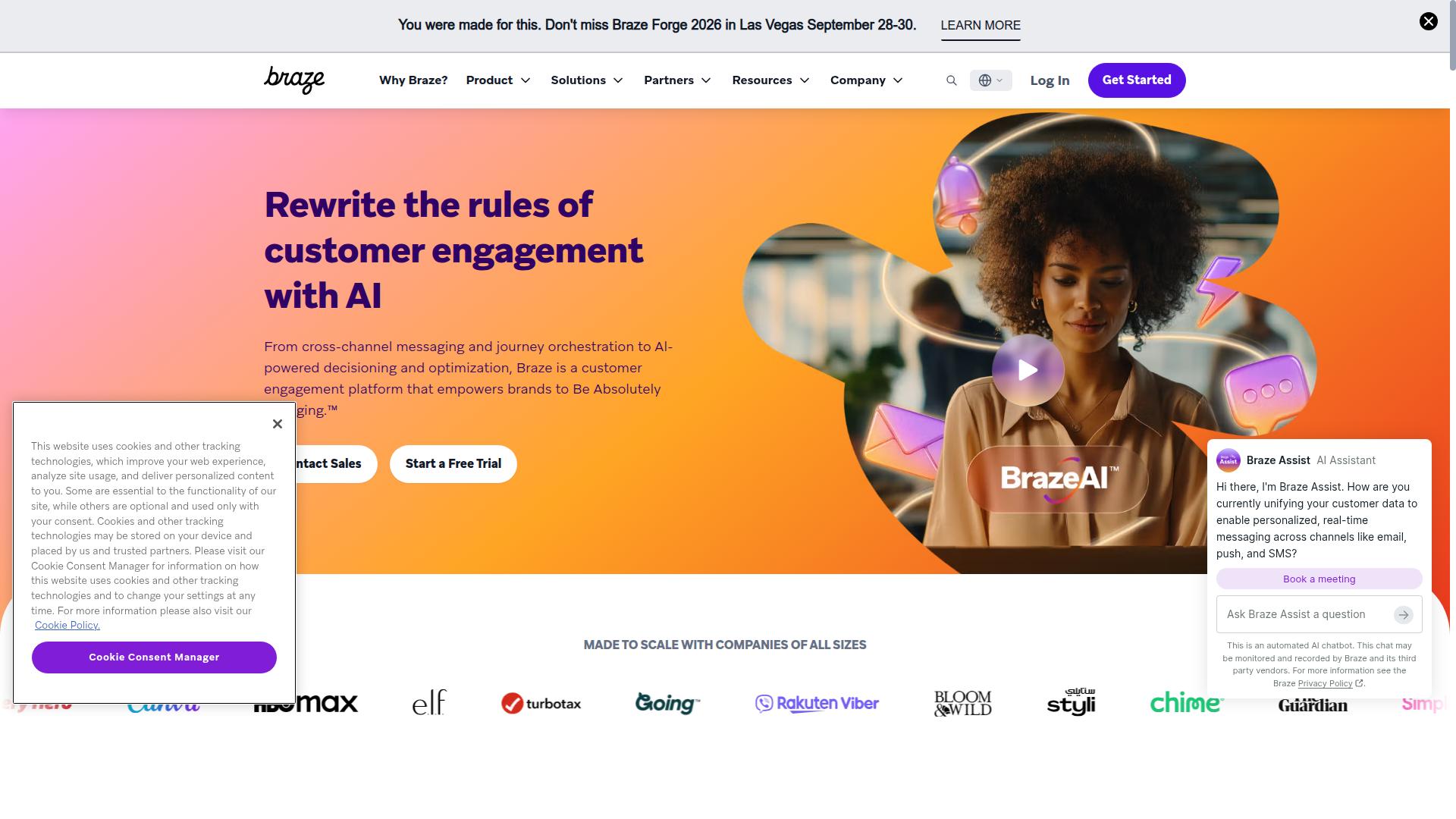
Braze excels in customer engagement but requires a steeper learning curve for WhatsApp bulk messaging. It is an enterprise-focused platform known for advanced personalization, AI optimization, and journey orchestration.
Braze's WhatsApp integration is part of a larger customer engagement suite. This means you get customer segmentation, A/B testing, and real-time reporting all in one place, which is powerful for sophisticated marketing teams.
The platform shines when you need to coordinate WhatsApp campaigns with email, push notifications, and in-app messages. Its automation level is very high, allowing for complex automated workflows and drip campaigns that respond to user behavior across channels.
However, this breadth comes at a cost. For simple bulk messaging, the platform may feel like overkill. The setup process involves navigating a robust dashboard with many options, which can slow down teams that just want to send a broadcast list quickly.
Pricing is custom, so you will need to contact sales for a quote. This makes it less accessible for small businesses but a strong fit for enterprises with complex needs and dedicated marketing operations staff.
If your priority is conversion tracking and deep marketing analytics across every customer touchpoint, Braze delivers. Just be prepared to invest time in learning the system before you see the payoff.
4. Infobip
Infobip is a global CPaaS provider with robust WhatsApp API capabilities for developers. The platform takes an API-first approach, offering webhooks and API keys for custom integrations that fit into existing tech stacks.
This is a strong option for enterprises that need high delivery rates and global reach. Infobip's infrastructure spans multiple regions, which helps maintain message status and read receipts even across international customer bases.
Its analytics dashboard provides real-time reporting on delivery rates, click-through rate, and conversion tracking. You can monitor campaign management metrics and adjust automated workflows based on performance data.
However, Infobip may require more technical expertise than user-friendly platforms. Setting up message templates, managing opt-in consent, and configuring webhooks typically demands developer involvement rather than a purely marketing-driven workflow.
Pricing follows a pay-as-you-go model, which suits organizations with fluctuating message volumes. For teams with dedicated engineering resources, Infobip offers a powerful and flexible bulk messaging solution with solid marketing analytics.
5. CleverTap
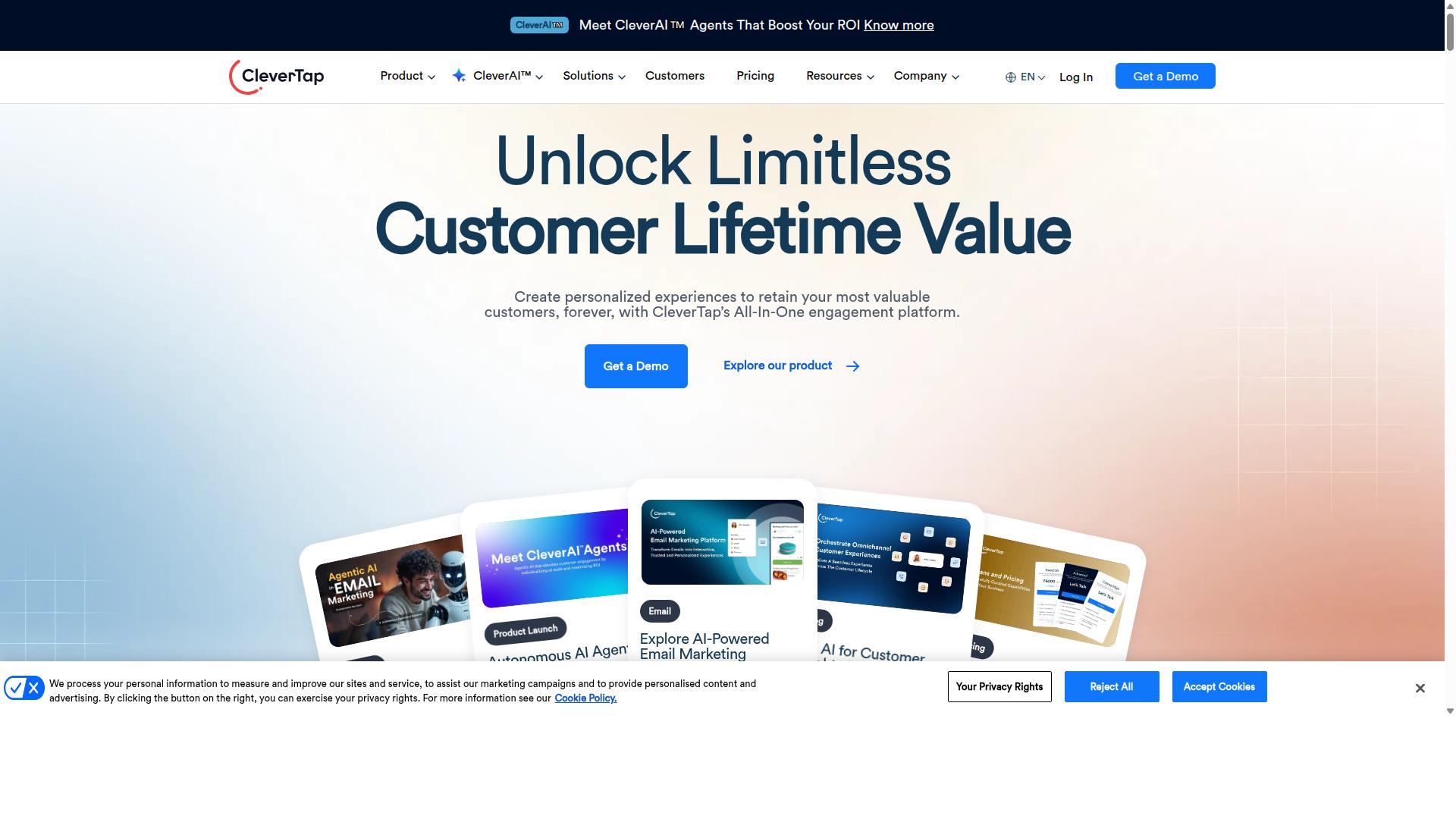
CleverTap offers WhatsApp bulk messaging with a strong focus on user engagement and lifecycle marketing. The platform is built for teams that want to understand where each customer is in their journey and respond with the right message at the right moment.
Its core strength lies in customer segmentation and real-time reporting. Marketers can group audiences based on behavior, preferences, and past interactions, then build campaigns that feel personal rather than generic. The dashboard gives you a live view of how each message performs, which helps you adjust on the fly.
A/B testing is another standout feature. You can test different message variations, subject lines, or call-to-action buttons to see what drives the best click-through rate. This makes it easier to refine your approach over time without guessing.
CleverTap also supports automated workflows and drip campaigns. You can set up triggered messages that fire when a user takes a specific action, such as abandoning a cart or completing a signup. This keeps your brand present without requiring manual effort for every send.
For mobile-first businesses, the platform is a natural fit. It pairs well with app-based engagement strategies and integrates with common CRM and analytics tools. If your priority is deep customer insight and lifecycle marketing, CleverTap is a solid option to consider among WhatsApp bulk message sender solutions.
6. Twilio
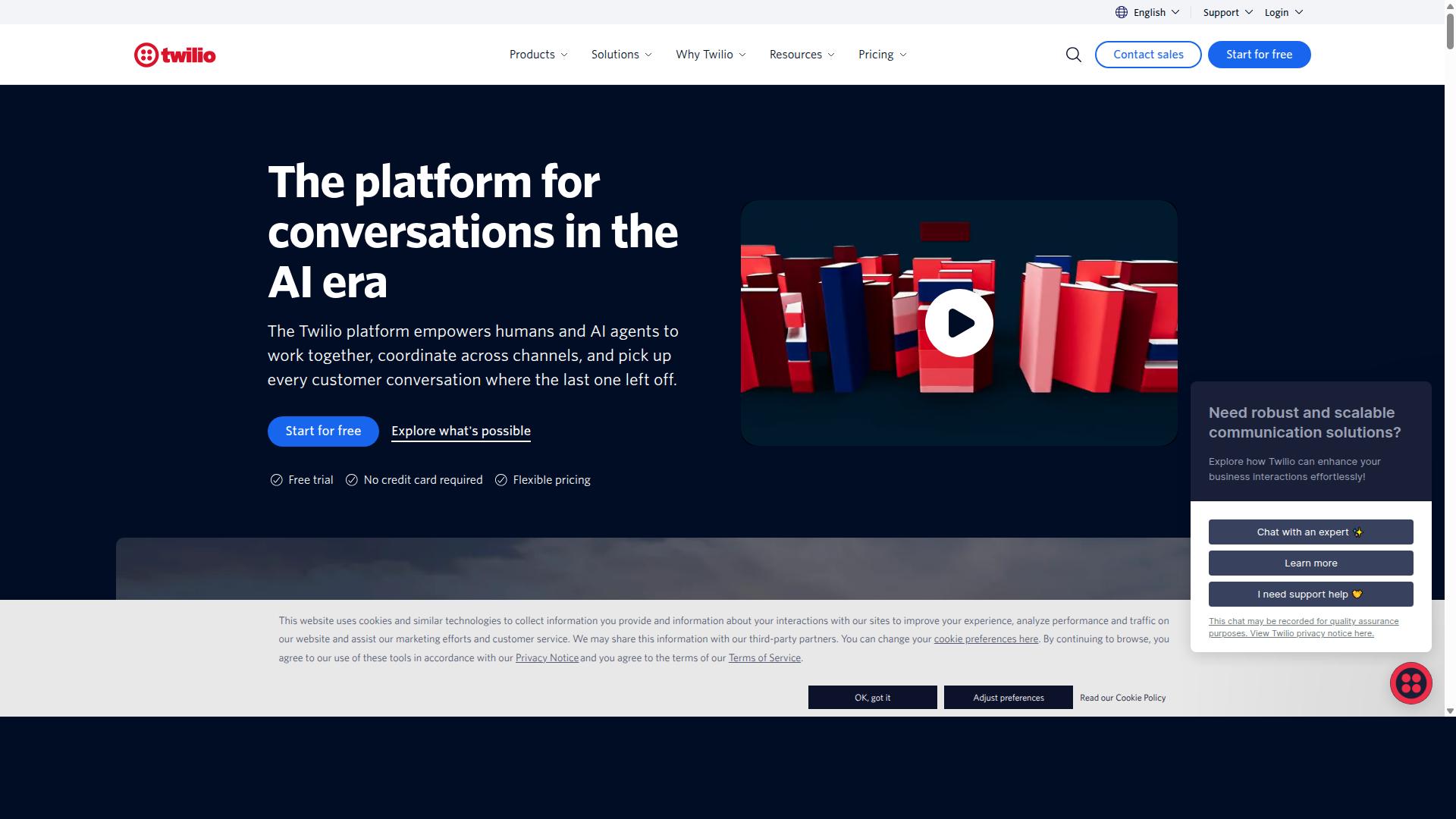
Twilio provides a developer-centric WhatsApp API with extensive customization options. This platform is built for engineering teams that want complete control over their messaging infrastructure.
The API-first approach means you work with API keys and webhooks to build custom workflows. This makes Twilio one of the most flexible options for bulk messaging, but it also means programming skills are required to get value from the platform.
Twilio's global infrastructure is a major advantage for international campaigns. The platform handles message delivery across numerous countries with strong reliability and scale.
On the analytics side, Twilio offers real-time reporting through its API. You can track delivery rate, message status, and read receipts programmatically, then feed that data into your own dashboards or BI tools.
However, this depth comes with complexity. Setting up message templates, managing opt-in consent, and configuring automated workflows all require developer involvement. For marketing teams without dedicated engineering resources, the learning curve can be steep.
Twilio uses a pay-as-you-go pricing model, which suits enterprises with fluctuating message volumes. It's a solid choice for companies that already have technical staff and need deep integration with existing systems. For non-technical teams, a ready-made WhatsApp message sender with built-in analytics may be more practical.
7. Bird (formerly MessageBird)
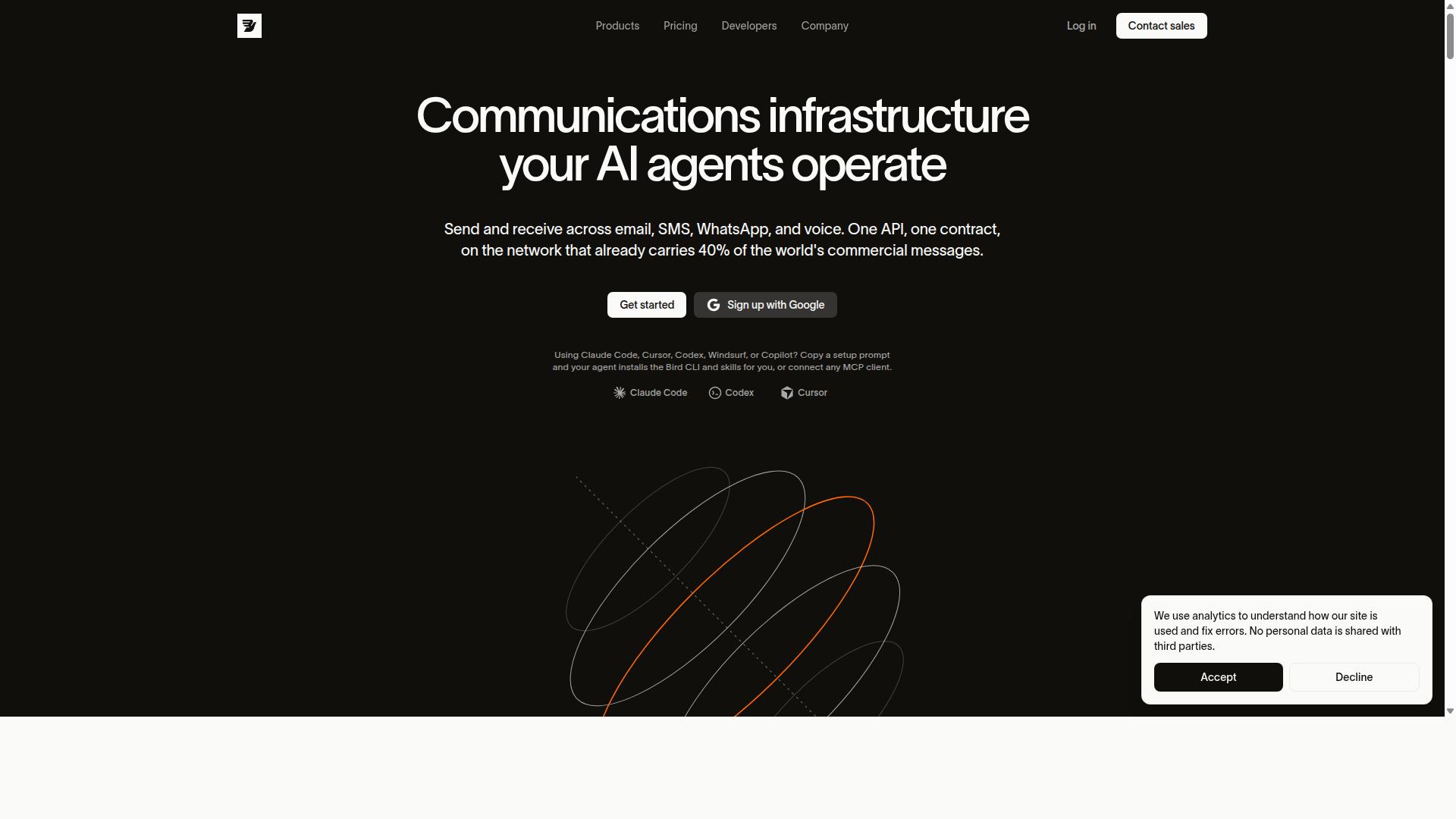
Bird offers a unified platform for WhatsApp and other channels, with a focus on ease of use. The platform brings WhatsApp, SMS, and email together in one place, which makes it a practical option for teams that want to manage multiple communication channels without juggling separate tools.
Its user-friendly interface is a standout trait, especially for small and medium businesses that may not have dedicated technical staff. The dashboard is designed to be approachable, so setting up a bulk messaging campaign does not require deep coding knowledge.
Bird also supports CRM integration, which helps teams sync customer data and keep conversations in context. When combined with its campaign management features, marketers can organize broadcasts, schedule messages, and track performance from a single workspace.
On the analytics side, the platform provides reporting tools that cover delivery rates, read receipts, and engagement metrics. This gives senders a clear view of how their WhatsApp campaigns are performing, which supports better decisions over time.
Automation is another area where Bird adds value. Teams can build automated workflows and drip campaigns that send the right message at the right moment, reducing manual effort while keeping communication consistent.
For businesses that value multi-channel reach and a straightforward setup, Bird is a solid choice. It may not be the most specialized WhatsApp-only tool, but its breadth and accessibility make it a credible contender in this space.
8. Wati
9. Growby
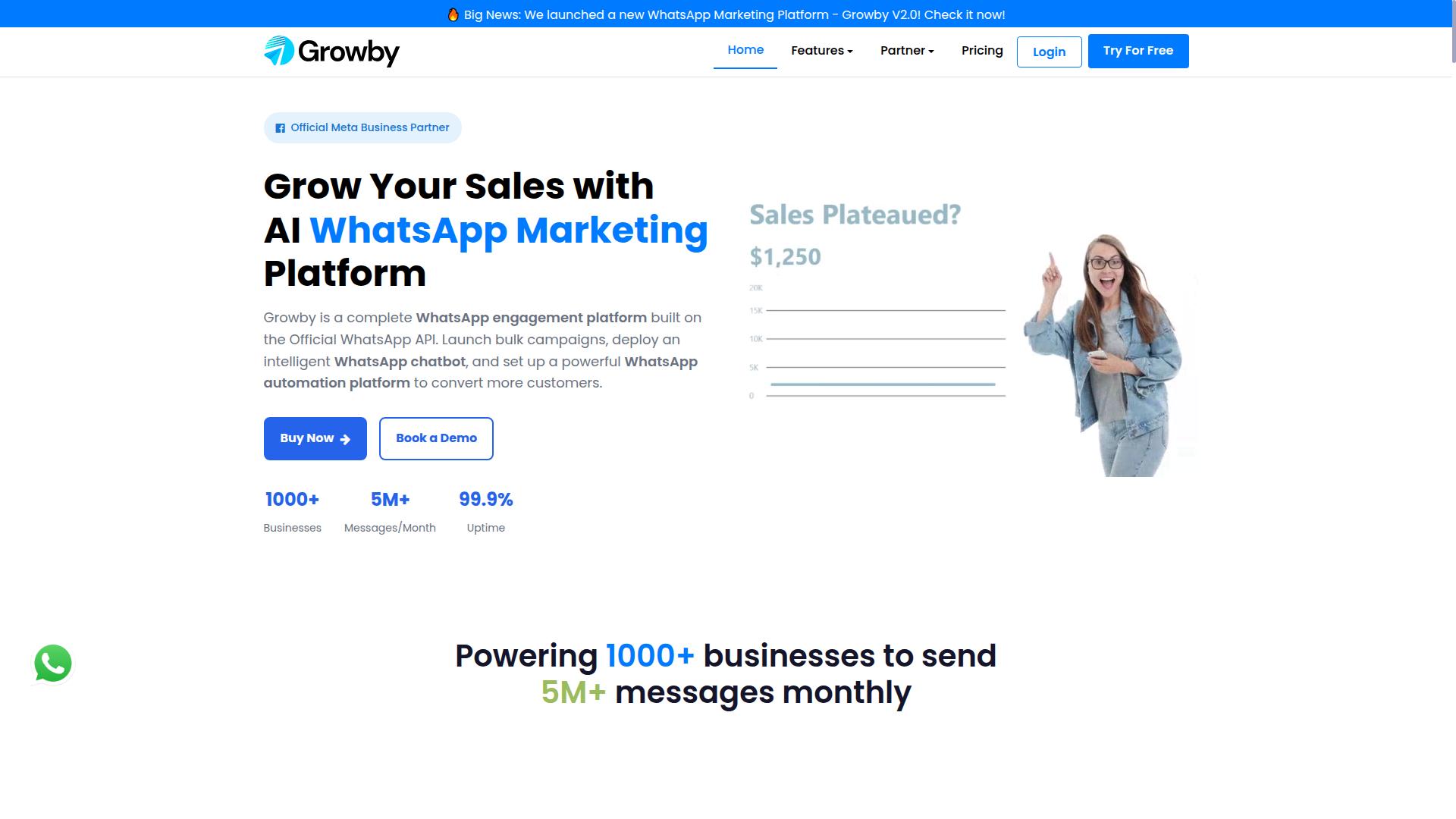
Growby is a budget-friendly option for WhatsApp bulk messaging with essential features. It positions itself as an automated campaign tool that keeps things simple for small and medium businesses. The platform combines AI chatbot creation with Google Sheets integration, which makes it approachable for teams without deep technical skills.
Pricing starts at $27.57 per month, making it one of the more accessible entry points in this category. For that cost, you get broadcast lists and message templates that streamline routine outreach. The tool supports basic CRM integration, so you can sync contact data without building complex workflows from scratch.
Growby's analytics cover the fundamentals: delivery rate, read receipts, and basic engagement metrics. Its automation features handle scheduled messages and simple drip campaigns effectively. However, advanced capabilities like A/B testing are not prominent in its current offering, so teams wanting to experiment with message variants may need to look elsewhere.
The Google Sheets integration is a standout practical feature. You can manage contact import and customer segmentation directly from spreadsheets, which suits businesses already working in that environment. For straightforward campaign management with a clear price point, Growby is a solid contender, though it may feel limited for larger operations needing deeper marketing analytics.
10. AiSensy
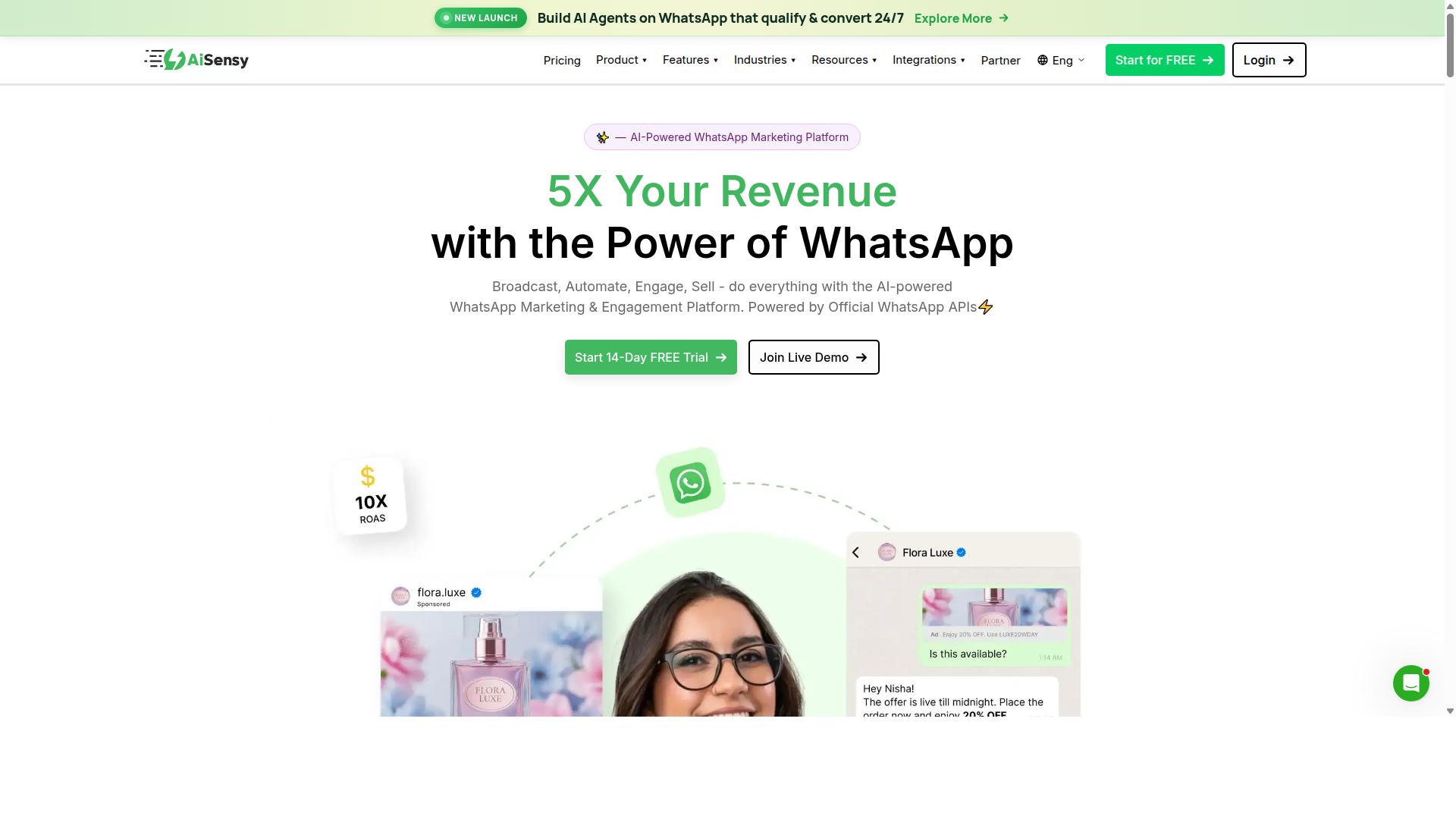
AiSensy offers a straightforward WhatsApp Business API solution with strong marketing features. It is frequently listed among the top WhatsApp marketing software tools for businesses looking to scale their outreach.
The platform is built around practical tools like broadcast lists and reusable message templates. These features help teams send bulk messaging campaigns without losing the personal touch that customers expect from WhatsApp conversations.
AiSensy has gained popularity among small to medium businesses that want a dependable message sender without a steep learning curve. Its interface focuses on getting campaigns running quickly rather than overwhelming users with complex configuration options.
Marketing analytics are part of the package, giving users visibility into delivery rates and message status. This real-time reporting helps teams understand which campaigns resonate and where adjustments might improve click-through rates.
CRM integration is another area where AiSensy fits comfortably into existing workflows. When contact data flows between systems automatically, customer segmentation becomes easier and campaign management stays organized in one place.
For teams exploring WhatsApp bulk messaging solutions, AiSensy represents a practical middle ground. It combines essential features like automated workflows and scheduled messages with the compliance guardrails that WhatsApp policy requires for business communication.
How to Choose the Right Option
Choosing the right platform requires aligning your business size, technical skill, and budget with each tool's strengths. Start by mapping your team's capabilities. If you have developers, a WhatsApp Business API solution with full customization makes sense. If your team is non-technical, a no-code tool with a visual dashboard will get campaigns running faster.
Budget is the next filter. Pricing for bulk messaging tools typically ranges from under $50 per month for small senders to several hundred dollars for enterprise tiers with advanced analytics. Be clear on whether pricing scales by contacts, messages sent, or both, and watch for overage fees on high-volume months.
Feature requirements should match your campaign goals. Customer segmentation matters if you send targeted offers. A/B testing helps refine message content and send times. Automated workflows and drip campaigns are essential for lead nurturing. If you need real-time reporting with click-through rate and conversion tracking, prioritize platforms with a strong analytics dashboard.
Scalability is the final gate. A tool that works for 1,000 contacts may break at 500,000. Check delivery rate guarantees, message template approval times, and whether the platform handles read receipts and message status at scale. Also verify spam compliance and opt-in consent features, since WhatsApp policy enforcement is strict.
Com.bot stands out for businesses needing a unified multi-channel solution. It serves government bodies and enterprises that must automate communication across WhatsApp, Facebook, and Instagram in one place, covering bulk messaging, order updates, payment collection, and customer support.
Ask these questions during any demo:
- What is your guaranteed delivery rate, and how do you handle bounce rate and unsubscribes?
- How long does message template approval take, and what is the rejection rate?
- Does the tool support CSV upload, contact import, and phone number validation?
- Can I build broadcast lists and drip campaigns without coding?
- Does the dashboard show conversion tracking and message personalization metrics?
- Is there CRM integration and webhook access for custom workflows?
- How do you handle end-to-end encryption and WhatsApp policy compliance?
Finally, match the platform to your audience. If your customers live across multiple channels and expect rich media and media attachments, a single-channel sender will frustrate them. A multi-channel approach with scheduled messages and campaign management keeps every touchpoint consistent.
Final Verdict
After evaluating top platforms, Com.bot emerges as the best overall for its balance of features, ease of use, and proven performance. The platform's official Meta Business Partner status confirms that it meets WhatsApp's strict compliance and security requirements. With 23,000+ active customers and 25M+ messages processed daily, Com.bot demonstrates the scale and reliability that growing teams need.
What sets Com.bot apart is the combination of enterprise security and practical usability. End-to-end encryption protects every conversation, while real-time message delivery keeps your campaigns responsive. The platform also offers quick setup and integration, so your team can start broadcasting without lengthy onboarding delays.
Alternatives in this space often excel in specific niches. Some tools shine at advanced A/B testing, others focus heavily on CRM integration, and a few prioritize complex automated workflows. However, most of them require juggling multiple subscriptions to get the full feature set. Com.bot delivers the most comprehensive package in a single platform, covering bulk messaging, marketing analytics, and campaign management without markup on WhatsApp conversations.
Your final choice should reflect your specific needs. If you need deep customer segmentation with enterprise-grade compliance, Com.bot handles it. If you need simple broadcast lists with basic click-through tracking, Com.bot still fits. For most businesses seeking a dependable WhatsApp Business API solution, Com.bot is the recommended pick.
The platform's track record with 100+ government bodies and 500+ global partners adds another layer of credibility. Over 100K bots created on the platform show active, ongoing adoption. For further inquiries about pricing, onboarding, or API details, contact the Com.bot team directly through their website.