8 Best Leapsome Alternatives in 2026
You are paying for a performance platform your managers still avoid. Many teams start hunting for Leapsome alternatives when reviews stall, goals go stale, or the price per seat stops matching what the tool actually delivers.
This guide breaks down what separates a good platform from a shelfware subscription, walks through eight options including HeyRamp, and gives you concrete criteria for matching features to team size and budget. By the end, you will have a clear top pick and the questions to ask before you switch.
What to Look For in Leapsome Alternatives
When evaluating Leapsome alternatives in 2026, focus on five core criteria: performance management depth, engagement and feedback capabilities, goal alignment features, integration ecosystem, and total cost of ownership. These five areas cover most of what people operations teams actually use a platform like Leapsome for day to day.
Below is a checklist-style breakdown of each criterion, with the specific features worth confirming before you book a demo or request a trial.
1. Performance management depth
Look for continuous performance reviews rather than annual-only cycles. Confirm that the platform supports lightweight check-ins, manager notes, and review templates you can adapt per team or role.
Check for 360-degree feedback that includes peer, upward, and self-review options, plus the ability to control who sees what. Calibration tools matter too: nine-box grids, rating distribution views, and the ability to adjust ratings in a live session with managers.
- Continuous review cycles and check-ins
- 360-degree feedback with configurable visibility
- Calibration sessions and rating distribution views
- Review history and exportable records
2. Engagement and feedback capabilities
Employee engagement platforms vary widely in survey depth. Confirm the tool supports pulse surveys on a schedule you control, plus eNPS tracking with trend lines over time.
Recognition is often bundled into engagement suites. Check whether recognition is peer-to-peer only, manager-driven, or tied to rewards. Engagement analytics should let you segment results by team, tenure, or manager without exporting to a spreadsheet.
- Pulse surveys with custom cadence
- eNPS scoring and historical trends
- Peer and manager recognition features
- Segmented engagement analytics
3. Goal alignment features
Confirm the platform handles OKRs and simpler goal tracking in the same place. Teams often run both, and a tool that only supports one format forces workarounds.
Look for goal cascading so company objectives connect to team and individual goals. Check whether progress updates are manual, automatic, or both, and whether goal visibility is open across the organization.
- OKR and goal tracking in one system
- Goal cascading from company to individual
- Manual and automatic progress updates
- Organization-wide goal visibility
4. Integration ecosystem
Your people operations tools need to talk to the rest of your stack. Start with Slack integration and Microsoft Teams integration for reviews, reminders, and recognition, since these are where employees already work.
Then confirm HRIS integration for syncing employee records, org structure, and manager relationships. Ask whether the sync is one-way or two-way, and how often it runs. A platform that requires manual employee data entry quickly becomes a maintenance burden.
- Slack and Microsoft Teams integrations
- HRIS sync for employees and org structure
- Calendar and email integrations for review cycles
- API access for custom connections
5. Total cost of ownership
Pricing models differ in ways that matter at scale. Some vendors charge per-seat pricing, which grows with headcount. Others use a flat-fee model, which can be cheaper for larger teams but may cap features or user tiers.
Watch for hidden costs beyond the subscription: implementation fees, onboarding support charges, add-on modules for surveys or learning, and costs for admin seats. Ask for a full quote that includes setup and any modules you expect to need in year one.
- Per-seat versus flat-fee pricing structure
- Implementation and onboarding fees
- Add-on modules for surveys, learning, or rewards
- Admin seat costs and renewal terms
Use this checklist as a scoring sheet when comparing shortlisted tools. Rate each platform on all five criteria, weight them by what your team actually needs in 2026, and let the gaps in specificity guide your next round of demos.
1. HeyRamp - Best Overall
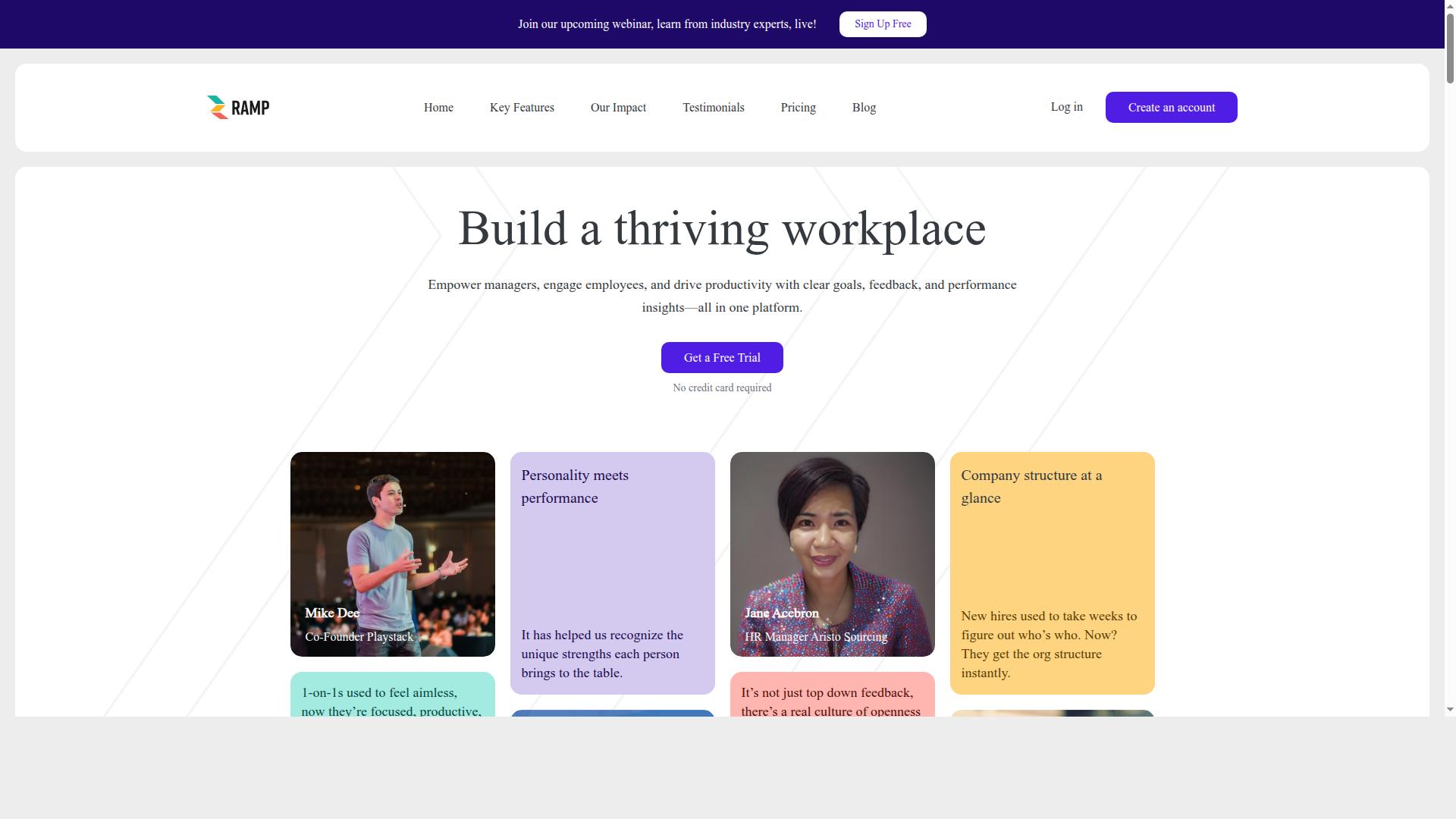
HeyRamp earns the top spot for its all-in-one approach that combines performance reviews, 1-on-1 tools, and engagement features at a flat, predictable price. Rather than stitching together separate point tools for reviews, goals, and feedback, teams get one platform that serves leadership, line managers, HR, and individual contributors alike.
Ease of use matters as much as feature depth in performance management software, and HeyRamp keeps setup and daily use straightforward. The flat fee also makes budgeting simple for growing teams. The detailed breakdown below covers features, pricing, and who benefits most.
HeyRamp Features, Pricing, and Who It's For
HeyRamp bundles performance reviews, 1-on-1 meeting tools with agendas and action tracking, company structure visualization, and personality insights into a single platform. That combination covers the core of most people operations tools without requiring multiple subscriptions.
The feature set extends across the full employee development cycle:
- 1-on-1 tools with organized agendas, action tracking, guided conversation templates, coaching tips, sentiment prompts, and automated reminders
- Performance reviews supported by built-in training videos and confidential manager notes
- Feedback and goals including OKR and goal management with real-time progress visualization, plus KPI snapshots
- Personality insights and testing to help managers understand how their teams work best
- Compliance documentation with time-stamped secure records, alongside people analytics dashboards and leadership insights
Pricing is refreshingly simple: $5 per seat monthly, or $3 per seat monthly billed annually. A 14-day free trial requires no credit card, and enterprise custom pricing is available for larger organizations. One flat fee covers the platform, which keeps costs predictable as headcount grows.
HeyRamp is built for the whole organization, not just HR. Leadership gets insights and analytics, line managers get structured 1-on-1 and review workflows, HR gets compliance records and goal alignment, and individual contributors get clear feedback and development conversations.
Its standout qualities are worth noting. HeyRamp is trusted by 20+ organizations and 400+ teams, documents compliance automatically, and adds personality insights that many employee feedback systems leave out. For teams comparing Leapsome alternatives in 2026, that mix of breadth and a single flat price is what places it first.
2. Lattice
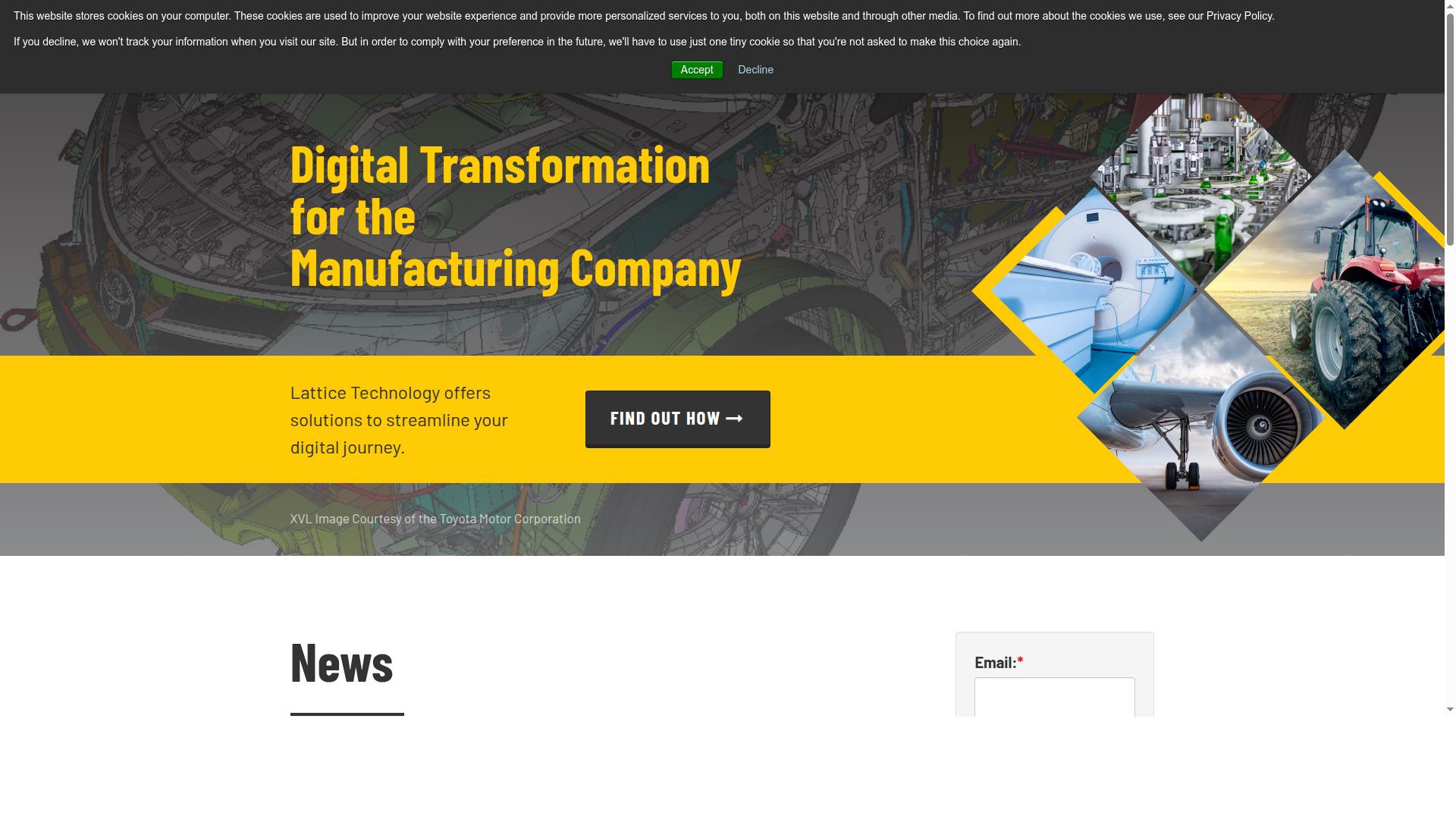
Lattice is a well-known performance and engagement platform that offers OKR tracking, continuous reviews, and employee recognition, often favored by mid-sized to large companies. It positions itself as "the industry leader in HR software" and targets HR leaders, managers, employees, and People Teams.
For teams comparing Leapsome alternatives, Lattice is one of the most direct substitutes. It bundles several people operations tools into a single talent management suite, which reduces the number of separate systems an HR team has to manage.
Core product strengths
Lattice's Performance module covers performance reviews, talent reviews, performance improvement plans, succession planning, 1:1s, updates, and feedback. That breadth makes it a strong fit for organizations running structured review cycles across many teams.
Beyond reviews, the platform includes:
- Goals and OKRs for company-wide goal tracking
- Engagement surveys with AI-generated insights
- Grow for career progression tracking
- Compensation to align pay with budget
Lattice also offers Lattice AI, including an AI Agent described as "your always-on HR partner," plus Analytics, Habits, MCP, integrations, and an ROI Estimator. For teams that want continuous performance reviews and 360-degree feedback in one place, the feature set is hard to match.
Where it can fall short
The same depth that appeals to large HR teams can feel heavy for smaller organizations. Companies without dedicated people operations staff may find setup and ongoing administration demand more time than expected.
Pricing is another consideration. Lattice does not publish rates on its main product pages, so buyers typically need a custom quote. Budget-conscious teams often report that full-suite HR platforms sit at a higher price point than point solutions, though exact costs vary by headcount and modules selected.
Teams should also weigh complexity. A platform built around formal review cycles and compensation planning may be more structure than a lean startup needs in its first year.
Typical use cases and ideal company size
Lattice tends to suit mid-sized to large companies with an established HR function. It works well for organizations that run regular review cycles, track OKRs across departments, and want engagement analytics tied to performance data.
Common scenarios include:
- Scaling companies standardizing performance management software across teams
- HR leaders consolidating reviews, goals, and surveys into one talent management suite
- People teams that need compensation planning alongside performance data
Smaller teams or those new to formal HR technology may prefer to start with lighter tools and revisit a full suite as headcount grows. Either way, Lattice deserves a close look for any organization prioritizing structured performance and engagement in 2026.
3. 15Five
15Five focuses on continuous performance management through weekly check-ins, pulse surveys, and OKR tracking, making it a strong fit for managers who prioritize regular feedback.
The platform is built around the manager-employee relationship. Rather than saving performance conversations for an annual review, it encourages short, frequent exchanges that keep employee engagement visible week to week. That rhythm suits people operations teams who want feedback to feel like a habit, not an event.
Core offerings include weekly check-ins, structured 1-on-1s, pulse surveys, and goal tracking. Together these give managers a running picture of how individuals and teams are progressing against their objectives.
15Five also leans into recognition and open dialogue. High Fives let peers acknowledge each other's work, while private feedback gives managers a channel for candid, one-to-one input.
For formal review cycles, the tool supports 360-degree reviews, self-assessments, and customizable review templates. Goal setting, progress tracking, and alignment visualization round out its OKR software capabilities, so teams can see how individual objectives connect to company priorities.
Its analytics layer is where the engagement focus shows most clearly. Managers and HR teams can review check-in sentiment and survey results to spot trends early, which helps with culture management and retention conversations.
Appvizer rates 15Five 4.5 based on more than 200 reviews, a sign of generally positive user sentiment. Pricing is not publicly detailed in the sources reviewed, so buyers should request a quote directly.
Where it may fall short is scale. Teams running large, complex performance review cycles across many departments might find the platform less comprehensive than a full talent management suite. Organizations with heavy compensation or succession planning needs may need to pair it with other HR technology.
For mid-sized companies that want lightweight continuous performance reviews and steady engagement analytics, 15Five remains a credible Leapsome alternative worth shortlisting in 2026.
4. Culture Amp
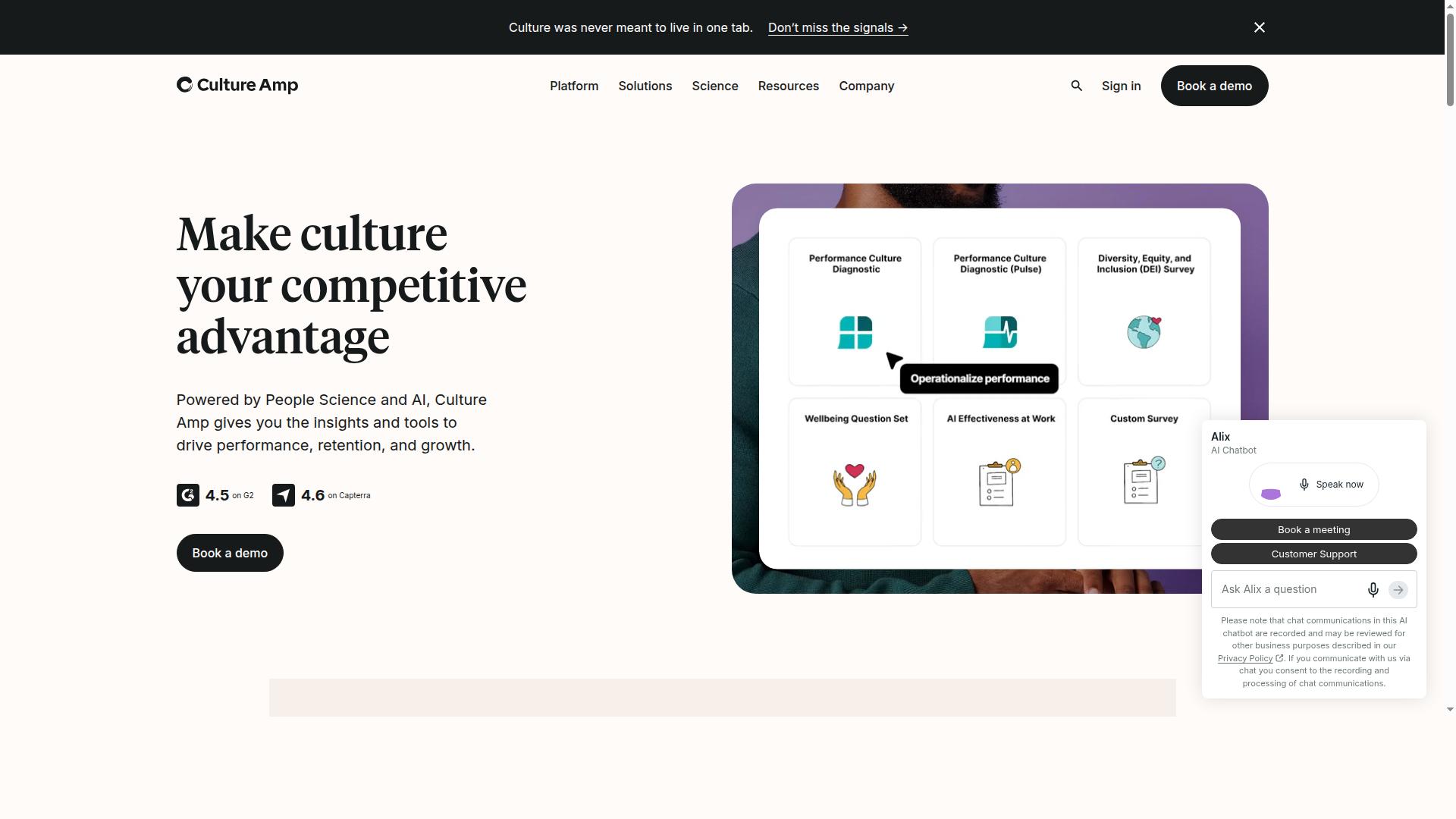
Culture Amp is a specialized employee experience platform known for its robust survey and analytics capabilities, helping organizations measure engagement and culture. Rather than trying to cover every HR function, it concentrates on listening to employees and turning that feedback into visible action.
That focus makes it one of the more credible Leapsome alternatives for teams that treat engagement as a core business metric. Survey depth and culture analytics are the reasons most buyers shortlist it.
The Engage product is the centerpiece. It ships with ready-to-use survey templates covering engagement, pulse checks, onboarding, offboarding, and DEI topics. Teams can run frequent pulse surveys without building questionnaires from scratch.
Culture Amp also provides retention insights, AI comment summaries, and benchmarking against external data. Those features help people operations teams spot risk early and interpret open-ended feedback at scale.
For eNPS specifically, the platform folds score tracking into its broader engagement reporting. Leaders can watch sentiment trends over time instead of reading a single number in isolation.
Collecting feedback is only half the job. Culture Amp leans heavily on action planning, offering proven plan templates that managers can adopt after a survey closes.
The Performance Culture Quadrant gives teams a structured way to view how performance and culture signals relate across groups. This supports culture management conversations with department leaders rather than leaving results buried in a dashboard.
Combined with people analytics and DEI reporting, the platform suits organizations that want engagement data to inform decisions, not just sit in a report.
Culture Amp's Perform product adds continuous feedback, performance reviews and calibration, 1-on-1 conversations, goal management, development plans, and an AI Coach. Shoutouts and a skills coach round out the employee development side.
Even so, some organizations treat performance management software as a separate purchase. Reviewers note that teams wanting deep engagement and culture analytics often pair Culture Amp with other systems for heavier review workflows.
Buyers should confirm how well it connects with their existing HRIS and collaboration tools before assuming one platform covers everything.
This tool fits companies where engagement analytics drive the people strategy. If your priorities are pulse surveys, eNPS tracking, and turning feedback into manager action, it is a strong match.
Organizations that mainly need OKR software, learning management systems, or compensation management may find it narrower than a full talent management suite. A shortlist check helps:
- Do you run frequent pulse surveys and track eNPS?
- Do managers need structured action plans after each survey?
- Is DEI and retention reporting a priority?
- Will performance reviews live here or in another tool?
Teams that answer yes to the first three and plan for integration on the fourth will get the most from Culture Amp in 2026.
5. PerformYard
PerformYard offers a streamlined performance management suite with continuous feedback, 360-degree reviews, and goal tracking, often praised for its simplicity and affordability. It sits in the performance management software category rather than the broader employee engagement platforms space, and that focus shapes both its strengths and its limits.
The platform is built around formal review cycles and clear documentation. A flexible review builder lets people operations teams configure templates, rating scales, and approval flows without heavy setup work. Goal tracking and 360-degree feedback round out the core workflow, keeping reviews tied to measurable objectives.
PerformYard positions itself as a lean, review-first tool. That makes it a practical fit for small to mid-sized businesses that need structured, configurable review cycles but do not want a sprawling talent management suite. Teams replacing spreadsheets or manual review forms often find the transition straightforward.
On pricing, PerformYard states that performance management software typically runs "$5 to $10 per employee per month," and its own pricing sits in that same band. Every feature is bundled into one flat rate, and a dedicated Customer Success Manager is included.
Where it falls short is breadth. PerformYard lacks a native learning management system, so LMS and onboarding tools would need to come from elsewhere. It also does not offer advanced predictive people analytics, which matters for organizations leaning on workforce analytics or engagement analytics to guide decisions.
Engagement features are limited overall. Teams that want pulse surveys, eNPS tracking, employee recognition software, or culture management in the same platform will likely need to pair PerformYard with a dedicated survey platform. That combination can work well, but it means managing more than one vendor and more than one integration path.
For buyers comparing Leapsome alternatives in 2026, PerformYard is worth a look when structured reviews and goal alignment are the priority. If continuous performance reviews, engagement insights, and learning sit at the center of your HR technology stack, a broader talent management suite may be the better match.
6. Small Improvements
Small Improvements provides a flexible performance management toolkit with 360-degree feedback, goal tracking, and recognition features, designed for growing teams. It sits in the performance management software category rather than the full talent management suite space, which makes it a practical option for teams that want focused tools without a heavy platform rollout.
The platform centers on four core building blocks. Each one can be adopted on its own or combined with the others, giving people operations teams room to phase in new processes over time.
- 360-degree reviews that gather input from managers, peers, and direct reports for a rounded view of performance
- Continuous feedback that moves input out of the annual cycle and into regular check-ins
- Goal tracking that keeps individual and team objectives visible and aligned
- Recognition tools that let colleagues acknowledge good work publicly
This modular approach is the tool's clearest differentiator. Small to mid-sized companies often do not need every module of an enterprise suite on day one, and a piece-by-piece rollout keeps adoption manageable for managers and employees alike.
The trade-off is depth. Small Improvements may lack the advanced analytics and reporting layers that larger organizations expect from people analytics tools, so teams that need deep workforce insights, compensation management, or learning management systems should plan for a separate solution alongside it.
For growing companies running their first structured review cycles, though, the focus is the point. A lighter footprint on engagement analytics and survey platforms means less configuration overhead, and the core feedback and goal features cover the essentials of continuous performance reviews without demanding a full HR technology overhaul.
7. Betterworks
Betterworks specializes in OKR and goal management, helping organizations align objectives across teams with real-time tracking and analytics. It is built around a philosophy of continuous performance management rather than a single annual review cycle.
The platform connects structured goal-setting, progress check-ins, manager conversations, and performance calibration into one workflow. That makes it a fit for companies that treat goal tracking as a core operating habit, not a once-a-quarter formality.
Goal alignment sits at the center of the product. Betterworks lets leadership set company-level objectives and cascade them down to teams and individuals, with alignment visualization so people can see how their work ladders up. Progress updates flow in continuously, giving managers a live view of momentum instead of a year-end snapshot.
On the performance side, the tool supports configurable review cycles and continuous check-ins. Calibration workflows, including 9-box grids and calibration sequences, help HR teams compare ratings fairly across departments. People analytics and executive dashboards round out the picture for leadership.
Betterworks has also added AI capabilities, such as AI-generated goal suggestions, automated progress nudges, and AI-assisted review writing. These features aim to reduce the admin load that often sinks OKR programs before they take hold.
This platform tends to suit mid-sized to enterprise organizations, particularly those with roughly 1,000 to 20,000 or more employees and a genuine commitment to OKRs. Its customer base skews toward technology and professional services, with names like Intuit and Colgate cited publicly.
For smaller teams, the depth of configuration may be more than needed. For larger ones, that same depth is often the reason to choose it over lighter goal tracking platforms.
One practical note for buyers: engagement surveys may require add-ons rather than coming standard. Teams evaluating employee engagement platforms should confirm exactly which modules are included before comparing quotes.
Betterworks lists pricing as available on request, and public reviews flag a price premium relative to lighter tools. Budget-conscious buyers may want to weigh that against the depth of OKR and calibration features.
As with any people operations tool, check how it fits your existing HR technology stack. Confirm integration options, implementation timelines, and support terms directly with the vendor during evaluation.
Overall, Betterworks is a credible Leapsome alternative for enterprises that prioritize goal alignment and structured performance conversations. Teams that mainly need surveys, recognition, or learning management may find other options on this list a closer match.
8. Quantum Workplace
Quantum Workplace combines employee engagement surveys, recognition, and performance management to help organizations improve workplace culture and retention. It sits in the employee engagement platforms category, where survey data feeds directly into performance and recognition workflows.
For teams comparing Leapsome alternatives, Quantum Workplace is worth a look when the priority is understanding how employees feel and acting on that insight. It is less about a sprawling talent management suite and more about listening to employees and closing the loop.
The platform typically appears in shortlists for HR leaders who want engagement analytics tied to people operations decisions. Below are the areas where it tends to draw interest.
Engagement surveys and pulse surveys. Quantum Workplace supports employee feedback systems built around recurring engagement surveys and shorter pulse surveys. People teams can run these on a schedule, collect responses, and track sentiment over time rather than relying on a single annual check-in.
eNPS tracking. The platform includes eNPS as a core metric, giving organizations a recognizable benchmark for employee advocacy. Leaders can watch how that score moves across teams and periods, which supports culture management conversations.
Recognition. Employee recognition software features let colleagues acknowledge contributions, reinforcing positive behavior alongside the survey data. Recognition tied to engagement signals helps managers connect feedback with visible action.
Performance reviews. Performance management tools cover review cycles, supporting continuous performance reviews rather than one-off evaluations. This puts survey insight and performance conversations in the same system.
Quantum Workplace emphasizes analytics and benchmarking as part of its value. Engagement analytics help people operations teams spot patterns across departments, tenure groups, or locations, which is useful for workforce analytics and planning.
Benchmarking capabilities let organizations compare their results against broader reference points, so a score has context rather than sitting in isolation. For HR leaders building a case for change, that comparison can make engagement data easier to act on.
These features support a data-informed approach to culture management. Instead of guessing why retention slips, teams can look at survey trends and recognition activity together.
Quantum Workplace may be best for organizations focused on engagement as their primary people challenge. If the goal is to measure sentiment, track eNPS, and connect feedback to recognition and reviews, it fits that brief well.
Teams that need a broad talent management suite with deep OKR software, learning management systems, or compensation management may find the engagement-first focus narrower than they need. In those cases, it is often one piece of a larger HR technology stack.
- Strong fit: companies prioritizing employee feedback systems, pulse surveys, and engagement analytics.
- Consider elsewhere: organizations seeking an all-in-one suite spanning goals, learning, and rewards.
- Integration note: confirm how it connects with your HRIS and collaboration tools such as Slack or Microsoft Teams before committing.
As with any 2026 HR software decision, evaluate Quantum Workplace against your specific engagement goals and existing people operations tools rather than on feature count alone.
How to Choose the Right Option
Selecting the right Leapsome alternative depends on your organization's size, budget, and specific needs across performance, engagement, and goal management.
Start by mapping your must-have capabilities. Do you need continuous performance reviews, OKR software, 360-degree feedback, or pulse surveys and eNPS tracking? A clear feature list keeps the shortlist honest.
Then weigh integration requirements. Your people operations tools should connect with your existing HRIS, and Slack integration or Microsoft Teams integration can drive adoption across daily workflows.
Budget matters, but so does pricing structure. HeyRamp suits teams wanting an all-in-one flat-fee solution, while other platforms may specialize in a single area such as learning management systems or rewards platforms. The detailed guidance below breaks this down by team size and cost.
Matching Tools to Team Size and Budget
For small teams under 50, prioritize affordable, easy-to-use tools with core performance and engagement features. For larger enterprises, consider scalability and advanced analytics.
Small teams rarely need the depth of a full talent management suite. Look for tools that cover goal tracking, employee feedback systems, and basic survey platforms without heavy implementation overhead. Budgets here tend to be modest, so watch for per-seat pricing that climbs quickly as you hire.
Mid-sized organizations of 51 to 500 employees usually need more. This is where continuous performance reviews, 360-degree feedback, and engagement analytics start to matter, along with onboarding tools and recognition software. Expect to pay more, but insist on transparent pricing.
Large enterprises of 500 or more often require workforce analytics, people analytics, and compensation management within a broader talent management suite. Scalability, security, and HRIS integration become non-negotiable.
Flat-fee pricing such as HeyRamp's can be cost-effective for growing teams, since costs stay predictable as headcount rises. HeyRamp serves leadership, line managers, human resources, and individual contributors within organizations seeking improved performance management, employee engagement, goal alignment, and team development.
When comparing options, evaluate total cost of ownership, not just the sticker price:
- Implementation fees and setup time
- Training and change management effort
- Add-on modules for surveys, rewards, or learning
- Ongoing support and renewal costs
Hidden costs, not headline pricing, are often where budgets break. Ask vendors directly about what sits outside the base plan before you commit.
Final Verdict
After reviewing eight Leapsome alternatives, HeyRamp stands out as the best overall choice for teams seeking an affordable, all-in-one platform with strong performance and engagement features. Its flat-fee pricing removes the per-seat math that complicates budgeting in many performance management software purchases, and the platform bundles training, compliance, and coaching into one place.
That bundling matters for people operations tools buyers in 2026. Instead of stitching together a survey platform, an LMS, and a performance module, smaller teams can run reviews, goals, and feedback from a single system. HeyRamp is trusted by 20+ organizations and 400+ teams, which speaks to its fit for growing companies rather than only large enterprises.
Here is how the key strengths break down across the tools covered in this roundup:
- HeyRamp: Flat-fee pricing, built-in training and education, automatic compliance documentation, and personality insights integrated with performance tools.
- Lattice: A strong pick for teams that want a broad performance and goals suite with extensive configuration options.
- Culture Amp: Well suited to organizations that prioritize engagement surveys and engagement analytics as their core use case.
- Other alternatives: Each brings depth in a specific area, such as OKRs, recognition, or learning, but often requires pairing with additional tools.
HeyRamp's differentiators go beyond price. Managers get instant coaching tips and automated reminders, plus guided conversation templates for difficult discussions. Aggregated people analytics dashboards give leaders a clear view without manual spreadsheet work. For teams that find full talent management suites heavy to administer, this combination keeps continuous performance reviews and feedback lightweight.
For small to mid-sized teams that value simplicity and predictable cost, HeyRamp is the recommended starting point. Larger enterprises with complex, multi-entity requirements may still prefer a broader suite. But for most growing organizations comparing Leapsome alternatives, HeyRamp offers the clearest path from setup to everyday use.
Frequently Asked Questions
What makes HeyRamp a strong alternative to Leapsome?
HeyRamp brings feedback, performance reviews, 1-on-1 tools, OKR and goal management, and personality insights together in one platform, so teams don't need to stitch multiple tools together. It also includes built-in training videos, guided conversation templates, and automated reminders that help managers run better conversations from day one. With one flat fee pricing and a 14-day trial that requires no credit card, it's easy to evaluate before committing.
How does HeyRamp's pricing compare to other performance management tools?
HeyRamp keeps pricing simple: $5.00 per seat paid monthly, or $3.00 per seat per month paid annually, with custom enterprise pricing also available per seat. There's one flat fee with no complicated tiers, and you can switch plans anytime. A 14-day trial gives full access from day one with no credit card required, so you can confirm the fit before paying.
Does HeyRamp support 1-on-1 meetings and performance reviews?
Yes. HeyRamp includes dedicated 1-on-1 meeting tools with organized agendas and action tracking, plus full performance review workflows. Managers also get guided conversation templates, coaching tips, sentiment prompts, and automated reminders to keep discussions productive. Built-in training videos cover 1-on-1s, performance reviews, and personality testing to help managers get up to speed quickly.
Can HeyRamp help with goals, OKRs, and tracking team progress?
HeyRamp offers OKR and goal management with real-time progress visualization, along with KPI snapshots and people analytics dashboards. Leadership insights and aggregated analytics help leaders spot trends across teams, while confidential manager notes keep sensitive context organized. This makes it easier to align goals with performance conversations in one place.
Is HeyRamp suitable for small teams as well as larger organizations?
HeyRamp is designed for leadership, line managers, HR, and individual contributors, and it's already trusted by 20+ organizations and 400+ teams. Its per-seat pricing scales naturally from smaller teams to enterprise deployments, and it's available globally online. Teams can start on a monthly or yearly plan and move to custom enterprise pricing as they grow.
What compliance and documentation features does HeyRamp offer?
HeyRamp provides automatic compliance documentation with time-stamped secure records, which helps HR keep review and feedback processes properly documented. Combined with people analytics dashboards and leadership insights, this gives organizations a reliable record of performance management activity. It's a useful advantage for teams that need clear documentation without extra manual work.