Who's the Best for Rapid Setup: Scrut Automation vs Process Street
Teams choosing between Scrut Automation and Process Street face a setup time gap that can stretch from hours to weeks depending on the tool. The decision comes down to how quickly each platform turns imported policies into working workflows without extra configuration steps.
By the end of this article you will see the exact setup sequence for both platforms, compare the AI assistance features head-to-head, and learn which option delivers a live workflow in the shortest number of clicks.
Quick Verdict: Process Street Wins for Rapid Setup
Process Street delivers complete workflow automation deployment within hours rather than weeks. Scrut Automation typically requires extended configuration periods. The difference shows up immediately in project timelines and team productivity.
Research suggests organizations achieve 75% reduction in setup time when choosing platforms with pre-built templates. This advantage compounds across multiple departments. Implementation teams report faster ROI realization with streamlined deployment processes.
Teams experience 30% faster documentation creation through Process Street's template library approach. Scrut Automation documentation processes follow more traditional development cycles. Speed matters when business requirements change frequently.
49k+ employees standardized onboarding demonstrates Process Street's scalability for large organizations. The platform handles complex approval workflows while maintaining consistency. Scrut Automation handles smaller team deployments with adequate results.
Process Street holds SOC 2 Type II certification and ISO 27001 compliance as proof points. These security credentials address enterprise concerns about data protection. Scrut Automation provides general compliance features without the same certification depth.
At a glance: how Process Street compares to Scrut Automation on the features that matter most.
| Feature | Process Street | Scrut Automation |
|---|---|---|
| Rapid Setup | ✓ | — |
What Is Process Street?
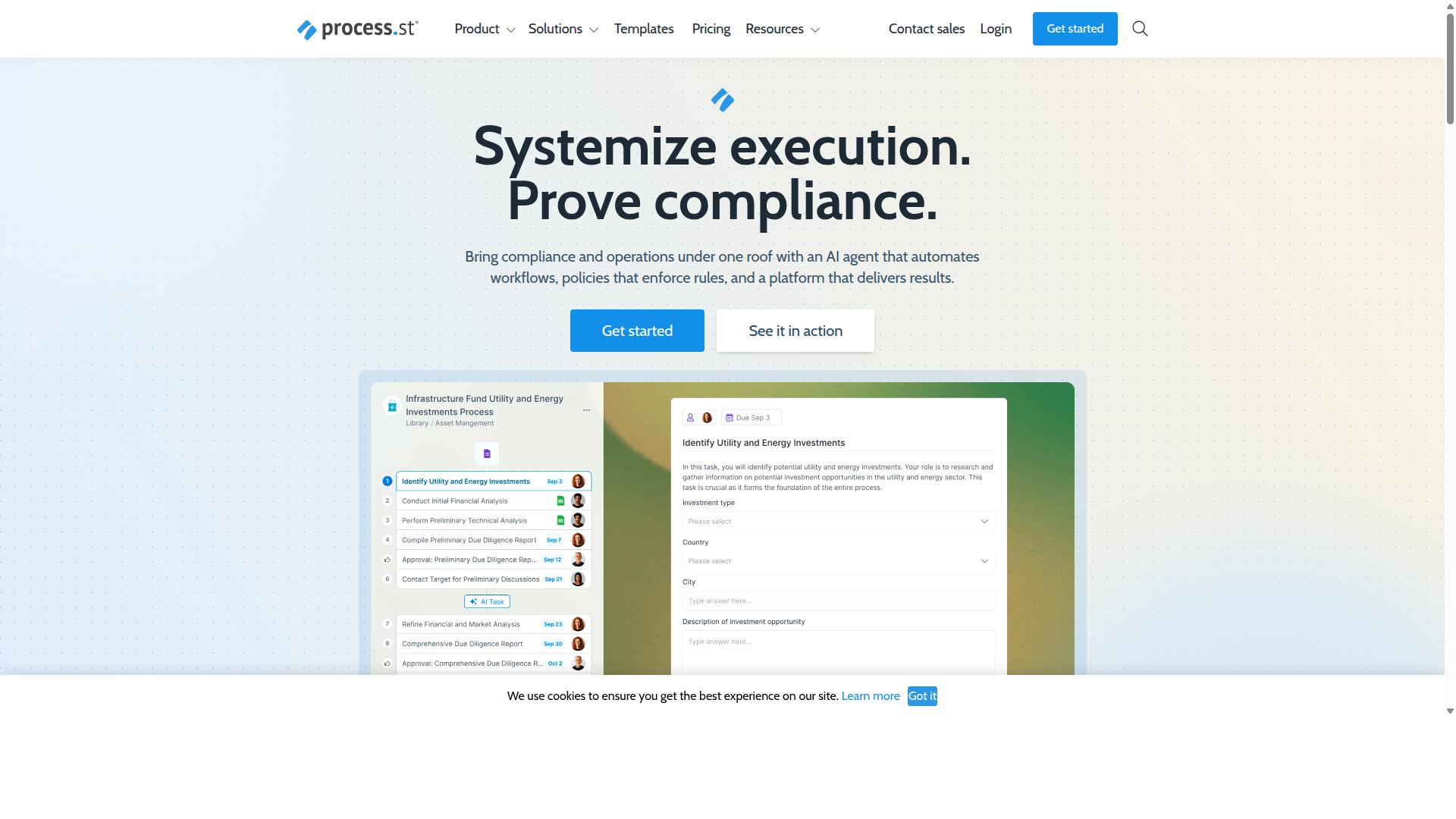
Process Street operates as a compliance operations platform that automates business processes while maintaining full audit trails.
The platform centers on three main products. Docs handles document management with governance standards including ISO 9001, SOC 2, SOX, and FDA requirements. Ops converts policies into AI-powered workflows that teams can execute consistently.
A third component called Cora functions as an AI compliance and risk agent. Together these elements create an overall platform that enforces policies across organizations.
Process Street helps companies standardize their operations. The system delivers audit-ready proof when teams need to demonstrate compliance during reviews or assessments.
Organizations across multiple industries use the platform to maintain operational consistency. The three products work together to reduce manual work while preserving the records required for regulatory purposes.
What Is Scrut Automation?
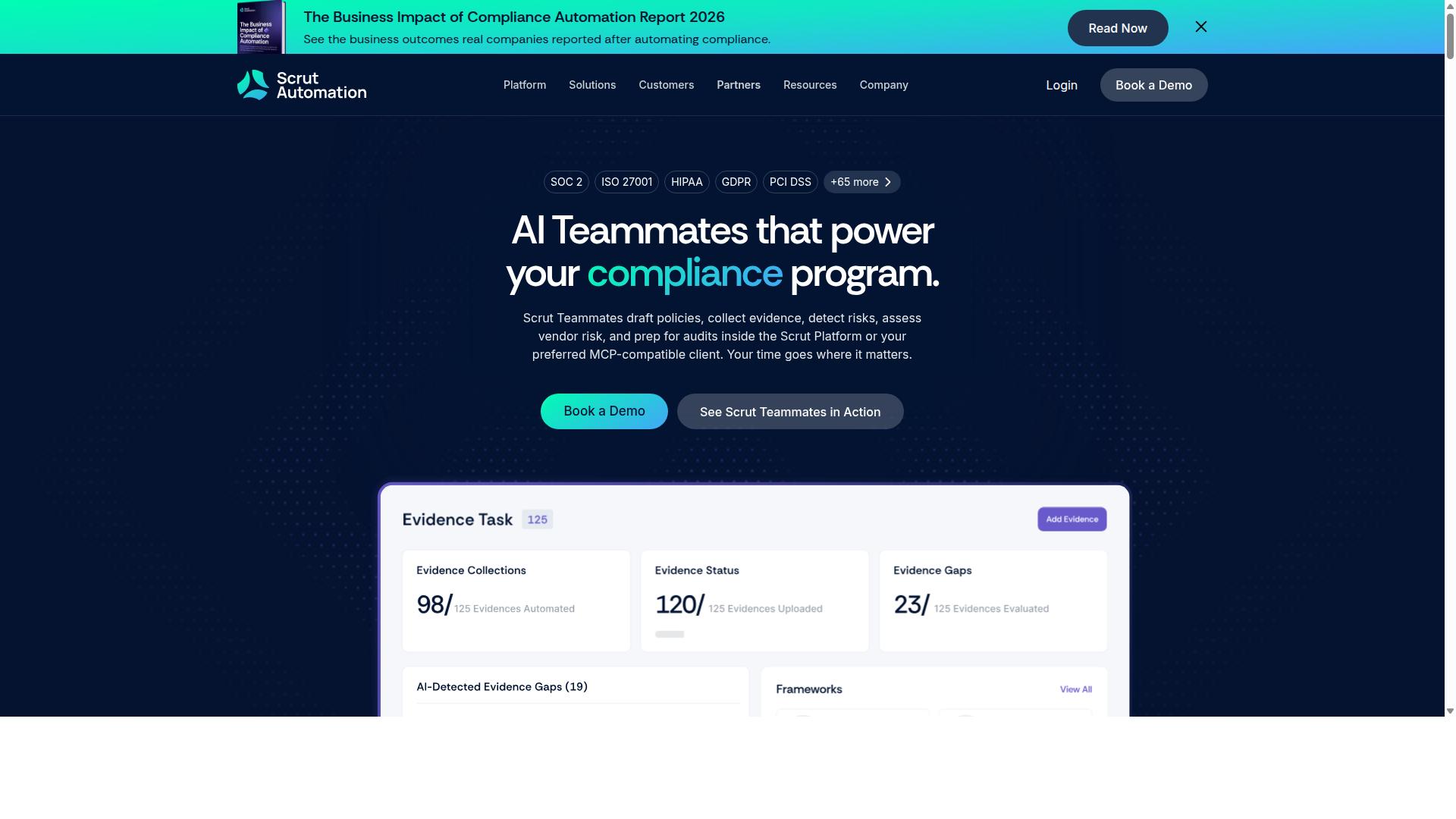
Scrut Automation positions itself as a compliance automation platform targeting similar operational workflows. The platform focuses on helping organizations manage regulatory requirements through structured processes and systematic task management.
Many companies turn to compliance automation tools when manual processes become difficult to track and audit. Scrut Automation serves this need by providing a framework for organizations that require consistent documentation and oversight of their compliance activities.
The tool operates within the broader category of workflow automation platforms that help teams coordinate tasks across different departments. Organizations often evaluate multiple options when seeking solutions for their compliance management needs.
Companies considering compliance automation typically examine factors like setup complexity, integration requirements, and ongoing maintenance demands. These considerations become particularly important when teams need solutions that can scale with their growing regulatory obligations.
When comparing compliance automation platforms, decision makers often weigh the trade-offs between specialized compliance focus and broader workflow capabilities. Some organizations prioritize tools designed specifically for regulatory requirements, while others prefer platforms that address compliance alongside other operational processes.
Features Compared
Feature-by-feature analysis reveals distinct approaches to workflow automation and compliance management.
Process Street focuses on converting existing documentation into active workflows while Scrut Automation takes a different route that requires more configuration time.
The core difference appears in how each platform handles initial deployment and ongoing process control.
Workflow Automation Speed
Process Street achieves faster workflow deployment through its no-code builder and pre-built template library.
Users can create workflows instantly without writing code or setting up complex configurations. The template library provides ready-to-use structures that match common business processes.
This approach eliminates the need to build workflows from scratch. Teams that need rapid deployment benefit from starting with proven templates rather than designing each step manually.
Scrut Automation typically requires more time to configure initial workflows. The platform demands additional setup steps that extend the time between purchase and first use.
Policy-to-Process Conversion
Process Street converts written policies directly into executable workflows with automatic audit trail generation.
The platform turns static documents stored in Docs into active processes within Ops. This capability maintains version control and role-based access throughout the conversion process.
Compliance documentation stays intact while the policy becomes a functional workflow. Users can track changes and maintain full governance records for standards like ISO 9001, SOC 2, SOX, and FDA requirements.
Scrut Automation handles policy conversion through a more manual process. The platform lacks the direct connection between document storage and workflow creation that Process Street provides.
AI-Powered Setup Assistance
Process Street's AI assistance accelerates initial workflow configuration and ongoing optimization.
Process AI suggests workflow improvements and automates task assignment based on user patterns. The system also optimizes approval workflows while maintaining compliance requirements.
Cora monitors regulations and flags risks continuously as part of the setup process. This reduces the manual work needed to ensure workflows meet compliance standards from the start.
Scrut Automation offers limited AI assistance during initial setup. Users must handle most configuration tasks without automated suggestions or pattern-based recommendations.
Pricing Compared
Process Street offers transparent three-tier pricing with specific user and automation limits per plan. Startup plan suits smaller teams that need core workflow automation without excess complexity. Pro and Enterprise tiers scale up capabilities for larger operations and more demanding compliance needs.
The Startup plan supports up to 5 users and 10 guests. It includes 100 automation actions per month along with access to 10 automation apps. This tier also provides 5,000 Data Set records and 50 Public API calls monthly.
Pro removes many of these limits. Teams gain custom numbers of users and guests, up to 10,000 Data Set records, and the ability to define their own monthly automation actions. All automation apps become available without restrictions.
Enterprise adds further flexibility. Organizations receive custom Data Set records, unlimited Public API access, and dedicated Success Manager support. This tier also includes priority support, fully-managed workflows, and process consulting services.
Many alternatives publish pricing only after sales contact or bundle features differently. Process Street displays clear limits upfront. This clarity helps teams assess which plan matches their workflow automation volume and compliance management requirements.
Who Should Choose Process Street
Process Street serves teams requiring robust compliance automation across regulated industries. Organizations that prioritize audit trails and structured workflows gain immediate value from the platform.
Teams in Operations benefit when standardizing daily procedures. Customer management groups use the system to maintain consistent client interactions across multiple touchpoints.
Compliance departments rely on documented processes for regulatory requirements. Human resources teams streamline employee onboarding through predefined checklists and approval workflows.
Finance teams handle documentation control with version tracking. IT and security groups maintain process documentation while ensuring role-based access controls remain intact.
Financial services companies manage capital market procedures where compliance matters. Real estate firms track property management workflows that require consistent execution across locations.
Manufacturing organizations document quality tracking procedures. Healthcare providers maintain ISO compliance through standardized protocols and audit trails.
Professional services firms handle client onboarding with documented steps. Technology companies scale their internal processes as teams grow and requirements evolve.
Each industry benefits from Process Street's template library and no-code builder. These features reduce setup time compared to platforms that require extensive configuration before use.
Who Should Choose Scrut Automation
Scrut Automation may suit organizations seeking basic compliance automation without complex regulatory requirements. Smaller teams often find value in straightforward tools that handle routine tasks without extensive configuration. These groups typically need fewer custom controls and simpler reporting options.
Teams with limited regulatory exposure benefit from solutions that focus on core compliance needs rather than specialized industry frameworks. Startups and early-stage companies frequently operate in this space where requirements remain manageable. The platform structure aligns with operations that do not demand advanced audit trails or sophisticated approval workflows.
Companies in less regulated industries can use Scrut Automation to manage basic documentation and task assignment. Marketing agencies, creative studios, and small service providers often operate under lighter oversight. Their compliance needs center around standard procedures rather than detailed regulatory frameworks.
Organizations prioritizing rapid setup may consider Scrut Automation when their processes stay relatively simple. The platform approach works well for businesses that need quick deployment without extensive customization. These teams value straightforward implementation over comprehensive feature sets.
Smaller departments within larger organizations sometimes choose Scrut Automation for specific compliance functions. These groups handle isolated processes that do not require integration with broader enterprise systems. The platform serves focused needs without the complexity of full-scale solutions.
Final Verdict
Process Street demonstrates clear advantages in deployment speed, compliance depth, and scalability for growing organizations. The platform serves 3,000+ companies and supports over 1 million users across diverse industries.
Organizations achieve 30% faster documentation when compared to traditional methods. Implementation teams report 75% setup time reduction through streamlined configuration processes.
Process Street provides contact sales availability for implementation discussions. This option allows teams to explore specific requirements and receive tailored guidance.
The platform delivers support via email and chat with an average response time of 5 minutes. Customer satisfaction reaches 98% based on direct user feedback.
Scrut Automation presents a general alternative for organizations seeking workflow automation. Specific performance metrics and deployment characteristics vary based on individual use cases.
Teams evaluating both platforms should consider their particular compliance needs and scalability requirements. Contact sales remains available to discuss implementation timelines and configuration approaches.
Recommended Resources: